
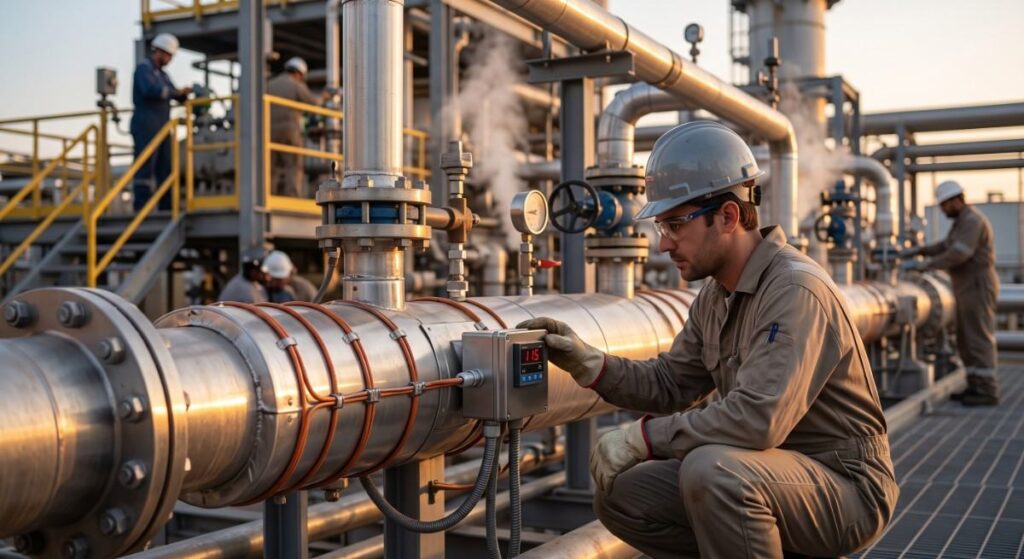
When industrial fluids become too thick to move efficiently, production can slow down, pipelines can become blocked, and energy consumption can increase. Materials such as oils, waxes, resins, bitumen, adhesives, molasses, and other temperature-sensitive liquids often need controlled heating to remain pumpable. This is where heat tracing for viscous fluids becomes an important industrial solution.
Maintaining the correct temperature throughout a pipeline is not simply about adding heat. The heating system must provide consistent temperature control while avoiding overheating, excessive energy consumption, and damage to the transported material. A properly designed electric heating system can help industries maintain fluid flow, improve process reliability, and reduce operational interruptions.
SC Electric provides electric heating solutions designed for industrial applications where dependable temperature maintenance is essential. Understanding how these systems work can help facility managers select an appropriate solution for their pipelines and processing equipment.
Why Do Viscous Fluids Need Heating?
Viscosity describes how strongly a fluid resists flowing. As temperatures decrease, many industrial fluids become thicker and harder to transport. In some cases, the material may partially solidify, creating serious problems inside pipes, valves, pumps, and storage equipment.
For example, heavy oils, waxes, bitumen, and certain chemical products can require a specific temperature range to maintain suitable flow characteristics. If the pipeline loses too much heat, the fluid may become increasingly difficult to pump.
Viscous fluid heating helps maintain the required operating temperature by compensating for heat lost through the pipe surface. Instead of allowing the material to cool during transportation, the heating system continuously supplies controlled heat along the pipeline.
The goal is not necessarily to make the fluid extremely hot. It is to maintain the minimum temperature needed for reliable movement and processing.
How Heat Tracing Maintains Flow Temperature
The basic principle behind heating viscous fluids is straightforward. A heating cable or heating element is installed along the pipeline carrying the fluid. When energized, it transfers heat to the pipe, which then transfers heat to the fluid inside.
Insulation is normally installed over the heated pipeline to minimize heat loss to the surrounding environment. A thermostat, temperature sensor, or control system can regulate the heating output according to operating requirements.
A typical arrangement may include:
- Heating cable or electric heating element
- Temperature sensors
- Thermostats or electronic controllers
- Thermal insulation
- Electrical protection equipment
- Junction boxes and accessories
- Appropriate pipe mounting materials
This combination creates an Industrial Heat Tracing System capable of maintaining a stable temperature across different sections of a process line.
Key Applications of Viscous Fluid Heat Tracing
Heat tracing for viscous fluids can be used across numerous industrial environments where maintaining fluid temperature is critical.
Common applications include:
- Heavy Oils and Fuel Oils: Heavy oils can become significantly more viscous at lower temperatures. Maintaining an appropriate temperature can make pumping and transfer easier while supporting consistent process operation.
- Bitumen and Asphalt: Bitumen requires temperature control because it can become extremely difficult to move when it cools. Heating systems can help maintain the required flow characteristics through storage and transportation lines.
- Waxes: Waxes may solidify when exposed to lower temperatures. Controlled heating can help prevent solidification inside pipelines and equipment.
- Chemical Processing: Certain chemicals, resins, and process fluids require temperature maintenance to remain within a specific viscosity range. Proper temperature control can support reliable material transfer.
- Food and Beverage Processing: Products such as syrups, oils, chocolate, and other temperature-sensitive materials can require controlled heating to maintain consistent flow during processing.
Pipeline Heat Tracing for Consistent Temperature
Pipeline heat tracing is particularly valuable when fluids travel long distances or pass through areas where ambient temperatures can cause significant cooling. Heat loss depends on factors such as pipe diameter, insulation quality, outdoor temperature, wind exposure, fluid temperature, and pipeline configuration.
Without appropriate temperature maintenance, a pipeline may experience cold spots. These areas can create localized increases in viscosity or solidification, even when most of the pipeline remains within the desired temperature range.
Properly designed pipe heat tracing distributes heat along the required sections of the pipeline. Engineers can calculate heat losses and determine the appropriate cable type, wattage, spacing, insulation, and control strategy.
Electric Heat Tracing vs. Other Heating Methods
Electric Heat Tracing is widely used because it offers flexible installation and precise temperature control. Electrical heating cables can be installed on straight pipe sections as well as around valves, flanges, pumps, tanks, and other components requiring additional heat.
Depending on the application, industries may select self-regulating, constant-wattage, mineral-insulated, or other specialized heating technologies.
The appropriate selection depends on:
- Required maintenance temperature
- Maximum exposure temperature
- Pipe material
- Fluid characteristics
- Ambient conditions
- Required heating output
- Hazardous-area requirements
- Control requirements
- Insulation thickness
A correctly engineered system provides heat where it is required instead of relying on excessive heating throughout the facility.
Benefits of Industrial Heat Tracing
A properly designed industrial heat tracing solution can provide several operational advantages.
- Maintains Fluid Flow: Keeping viscous materials within their required temperature range helps reduce flow resistance and supports smoother transportation.
- Reduces Blockage Risks: Temperature maintenance can help prevent waxes, oils, bitumen, and other materials from becoming too thick or solidifying inside pipelines.
- Supports Process Consistency: Stable temperatures can contribute to more consistent processing, pumping, dosing, and material transfer.
- Improves Equipment Reliability: Pumps and other equipment may operate more effectively when the transported fluid has the appropriate viscosity.
- Provides Targeted Heating: Electric systems can be designed around individual pipelines, valves, tanks, and process components, allowing heating to be concentrated where it is needed.
Industrial Heat Tracing Installation India: Important Considerations
For industrial heat tracing installation India, system design should account for local operating conditions as well as the specific requirements of the process fluid. Industrial facilities may have different ambient temperatures, weather exposure, operating schedules, and electrical infrastructure.
Professional installation should begin with a heat-loss calculation. Engineers need to understand the pipeline dimensions, fluid temperature requirements, minimum ambient temperature, insulation specifications, and process conditions.
Cable selection is equally important. Using an unsuitable heating cable can result in inadequate heating, excessive energy consumption, or premature system failure.
Installation should also include suitable electrical protection, temperature controls, proper cable attachment, and appropriate insulation. In demanding industrial environments, the system may also need to meet specific safety and hazardous-area requirements.
Energy Efficiency and Operating Costs
One concern associated with electric heating is electricity consumption. However, energy efficiency depends heavily on system design and control.
A common misconception is that installing a higher-output heating cable automatically produces better results. In reality, excessive heating can increase energy consumption without providing additional process benefits.
Poor insulation is another important factor. If heat escapes rapidly from the pipeline, the heating system must operate for longer periods to compensate.
Understanding high electric bill causes can therefore be useful when evaluating an existing heating installation. Common causes may include inadequate insulation, incorrect cable sizing, poor temperature control, continuous operation, damaged insulation, or unnecessary heating of sections that do not require temperature maintenance.
A properly designed industrial heat tracing system can combine suitable heating output with automatic temperature control to avoid unnecessary energy use.
Maintenance of a Heat Tracing System
Regular maintenance helps preserve heating performance and reliability. Operators should inspect cables, connections, insulation, controllers, sensors, and electrical protection devices according to the manufacturer’s recommendations.
Temperature readings should also be monitored. Unexpected temperature changes may indicate damaged insulation, sensor problems, cable failure, or changes in process conditions.
During maintenance, look for:
- Damaged heating cables
- Loose connections
- Wet or damaged insulation
- Faulty temperature sensors
- Incorrect thermostat settings
- Electrical protection issues
- Physical damage around valves and fittings
For facilities operating heat tracing for viscous fluids, preventive maintenance is particularly important because an unexpected heating failure can allow the material to cool and become difficult to move.
Choosing the Right Industrial Heating Partner
Selecting the correct heating solution requires more than choosing a cable based on wattage. A complete assessment should consider the fluid, pipeline design, temperature requirements, heat loss, insulation, controls, operating environment, and electrical infrastructure.
SC Electric can help industries evaluate their requirements and develop suitable electric heating solutions for pipelines and process equipment. Professional engineering and installation can help ensure that the heating system provides consistent temperature maintenance while supporting operational efficiency.
For facilities planning industrial heat tracing installation India, working with an experienced provider can also simplify system selection, installation, testing, and maintenance.
Conclusion
Maintaining the correct temperature is essential when industrial fluids become highly viscous at lower temperatures. A properly engineered heating solution can help prevent flow problems, reduce solidification risks, and support reliable industrial processes.
From heavy oils and bitumen to waxes, chemicals, and temperature-sensitive process materials, heat tracing for viscous fluids provides a practical method for maintaining required flow temperatures. With suitable cable selection, insulation, temperature controls, and professional installation, industries can achieve dependable heating without unnecessary energy consumption.
SC Electric offers solutions for applications involving pipeline heat tracing, process temperature maintenance, and other industrial electric heating requirements. By designing the system around actual heat-loss conditions and fluid requirements, businesses can maintain efficient material flow and improve overall process reliability.
FAQ
What is heat tracing for viscous fluids?
Heat tracing for viscous fluids uses electric heating cables installed along pipes to maintain a required temperature. It prevents fluids from becoming excessively thick, reducing flow resistance and helping maintain reliable pumping and transportation.
Why is temperature control important for viscous fluids?
Temperature control prevents viscous materials from becoming too thick or solidifying inside pipelines. Maintaining the correct operating temperature improves flow, supports consistent processing, reduces blockage risks, and helps equipment operate more efficiently.
Which heating cable is suitable for viscous fluids?
The appropriate heating cable depends on fluid temperature, pipe size, heat loss, insulation, ambient conditions, and operating requirements. Self-regulating, constant-wattage, and mineral-insulated cables may be suitable for different industrial applications.
Can heat tracing reduce industrial energy consumption?
Yes. Properly designed heating systems can reduce unnecessary energy use through suitable cable sizing, insulation, and automatic temperature control. Efficient operation prevents excessive heating while maintaining the temperature required for reliable fluid flow.
Why is professional heat tracing installation important?
Professional installation ensures correct cable selection, spacing, electrical protection, temperature sensing, insulation, and control. Proper installation improves heating performance, safety, reliability, and service life while reducing the risk of costly operational problems.