
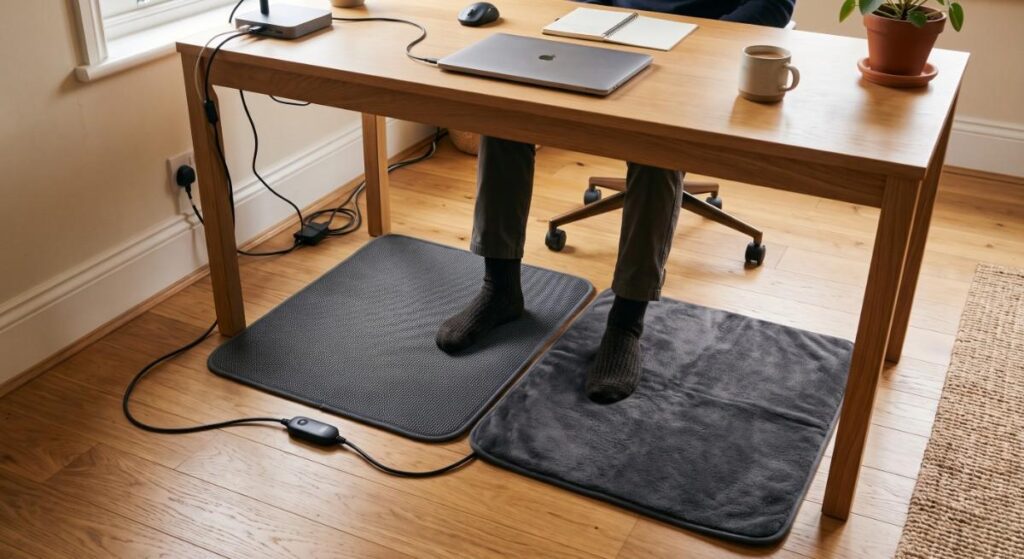
Imagine arriving at the office on a cold morning and feeling warmth under your feet instead of stepping onto a hard, chilly floor. That small difference can change how comfortable a workspace feels from the first hour of the day. Modern workplaces increasingly focus on comfort, energy management, and employee experience, making radiant floor heating an attractive option for offices, cabins, reception areas, meeting rooms, and commercial workspaces.
A heated floor mat for office spaces provides gentle, evenly distributed heat from beneath the walking surface. Instead of relying only on air circulation, it warms the floor and nearby surfaces for balanced comfort. SC Electric provides electric heating solutions for applications where dependable, controlled warmth matters.
What Is an Electric Floor Heating Mat?
An electric floor heating mat is a thin heating assembly containing resistance heating elements arranged in a structured pattern. When electrical power passes through the elements, they generate heat that transfers upward through the floor finish. Depending on the product and installation method, the mat can be placed below tiles, stone, laminate-compatible systems, or other approved flooring assemblies.
An electric heated floor mat for office areas can be especially useful when a business wants localized warmth rather than a large central heating installation. The system can be paired with a thermostat or suitable control system so that temperature settings can be adjusted according to occupancy and operating schedules.
Unlike portable heaters, an office floor heating mat does not occupy desk space or create obstacles in busy walkways. Once installed beneath the floor, the elements remain largely out of sight.
Why Floor Heating Works Well in Offices
Office environments have different heating requirements from warehouses, factories, or residential rooms. Employees may remain seated for long periods, desks can create localized comfort zones, and open-plan layouts can make conventional heating less uniform.
A heated mat for office floor areas can reduce the feeling of cold surfaces. This is valuable in offices with large glazed areas, tiled floors, entrance zones, or rooms where occupants regularly complain about cold feet.
A heated floor mat for office zones can also distribute warmth across a defined surface. The result is a comfortable floor temperature that complements the broader HVAC system rather than necessarily replacing it.
Key Benefits for Modern Workplaces
One of the biggest advantages of electric floor heating is targeted comfort. Businesses can design heating zones according to room use, allowing meeting rooms, reception areas, workstations, or smaller offices to receive the appropriate level of warmth.
An electric floor heating mat for office applications can also support efficient temperature management. With appropriate insulation, thermostatic control, scheduling, and correct sizing, heat can be delivered when and where it is required.
Another benefit is space saving. Traditional portable heaters need floor or desk space and may interfere with furniture layouts. A properly specified heated floor mat for office zones can remain concealed while delivering warmth where occupants need it. An office floor heating mat can also preserve flexible furniture layouts.
The Benefits of Industrial Electric Heating Systems also demonstrate why electrically controlled heating can be valuable in demanding commercial environments. The same principles of control, reliability, and targeted heat apply to carefully designed office systems.
Heating Cables vs Heating Mats: Which Is Better?
When planning an electric floor heating project, many buyers compare Heating Cables vs Heating Mats. Both technologies use electrical resistance to generate heat, but their installation characteristics are different.
Heating cables provide flexibility because installers can position the cable according to the required layout and spacing. They can be useful for irregularly shaped areas or projects where heating coverage needs to be customized around fixed features.
Mats, by contrast, usually have heating elements already arranged at a consistent spacing. This can make installation faster and more predictable across regular floor areas. A mat may be particularly convenient for offices with clearly defined rectangular rooms.
The best choice depends on floor construction, room geometry, heat output, floor finish, installation depth, and project specifications. A professional assessment can determine whether cables or mats are more suitable.
Choosing the Right Office Heating Mat
Selecting the right system starts with the room. Measure the usable heated area and identify permanent furniture or zones where heating is unnecessary.
Insulation, glazing, room height, floor construction, outside temperatures, and existing HVAC equipment influence the required output. Floor-finish compatibility should also be confirmed before installation, along with thermostat and electrical protection requirements.
For selected heating zones, a properly specified office underfloor heating mat can provide a discreet solution while meeting electrical load, floor temperature, and safety requirements.
Installation and Control Considerations
Correct installation is essential for reliable performance. The substrate should be prepared according to specifications, and heating elements must be positioned without damage or sharp bends.
Temperature sensors should connect to a compatible thermostat, with schedules aligned to office occupancy. An office underfloor heating mat should follow manufacturer instructions and applicable electrical standards, while qualified professionals should handle electrical connections and testing.
Maintenance and Long-Term Performance
Electric radiant systems have relatively low visible maintenance because the elements are protected beneath the floor. Reliable performance still depends on correct installation and control. Thermostats, sensors, connections, and protective devices should be checked when required. Keeping installation records can also make future renovation work safer.
A heated floor mat can provide long-term value when correctly sized, installed, controlled, and used within its design limits.
When Is Floor Heating a Good Office Choice?
Electric radiant heating is useful in smaller offices, reception spaces, conference rooms, cabins, renovated buildings, and areas where conventional heating does not provide sufficient floor-level comfort. It can also work as supplemental heating alongside an existing HVAC system.
An electric heated floor mat for office spaces may be less suitable where the floor cannot accommodate the system, insulation is inadequate, or electrical capacity is insufficient. A site assessment should come first.
How SC Electric Supports Heating Requirements
For businesses evaluating the Benefits of Industrial Electric Heating Systems, SC Electric emphasizes application-specific design, dependable electrical performance, suitable controls, and careful selection rather than a one-size-fits-all approach.
SC Electric focuses on electrical heating solutions for commercial and industrial applications. Its product range can support projects requiring dependable heat transfer, controlled temperature management, and application-specific design.
For an office project, the goal should not simply be the highest-output product. A better approach is to understand the space, calculate heating requirements, select compatible materials, and establish appropriate controls. Considering usage, insulation, floor construction, and electrical capacity supports practical comfort.
Final Thoughts
Workplace comfort is influenced by details that are easy to overlook, and floor temperature is one of them. A properly designed heated floor mat for office spaces can deliver quiet, unobtrusive warmth while preserving valuable room space and supporting controlled heating.
For businesses comparing radiant options, an electric floor heating mat for office applications offers a useful combination of comfort, zoning, and discreet installation. The right solution depends on careful design rather than a one-size-fits-all product.
SC Electric can help businesses evaluate electrical heating requirements and choose solutions suited to their application. With correct sizing, professional installation, suitable controls, and regular checks, office floor heating can become a dependable part of a comfortable and energy-conscious workplace.
FAQ
What is an electric floor heating mat for an office?
It is a thin electrical heating system installed beneath approved flooring. Resistance elements generate controlled radiant heat, warming the floor surface and improving comfort without occupying desks, walls, or walking areas while preserving valuable workspace.
Are heated floor mats energy efficient for offices?
They can be efficient when correctly sized, insulated, zoned, and controlled. Programmable thermostats allow heating schedules to match occupancy, helping reduce unnecessary operation while maintaining comfortable floor temperatures during working hours across changing seasonal conditions.
Can floor heating replace office HVAC systems?
Floor heating can provide primary or supplemental warmth depending on building design, insulation, climate, and heat demand. A professional assessment determines whether radiant heating alone or alongside HVAC is the better approach for office needs.
Are heating mats suitable for every office floor?
Not always. Suitability depends on flooring material, construction, insulation, available installation depth, electrical capacity, and temperature limits. Always confirm compatibility with the heating manufacturer before beginning installation or renovation work for safe installation and performance.
Why choose SC Electric for office heating solutions?
SC Electric focuses on electrical heating solutions and application-specific design. Its approach considers heating requirements, installation conditions, controls, and reliable operation, helping businesses select practical systems suited to their workplace requirements and objectives comfort.