
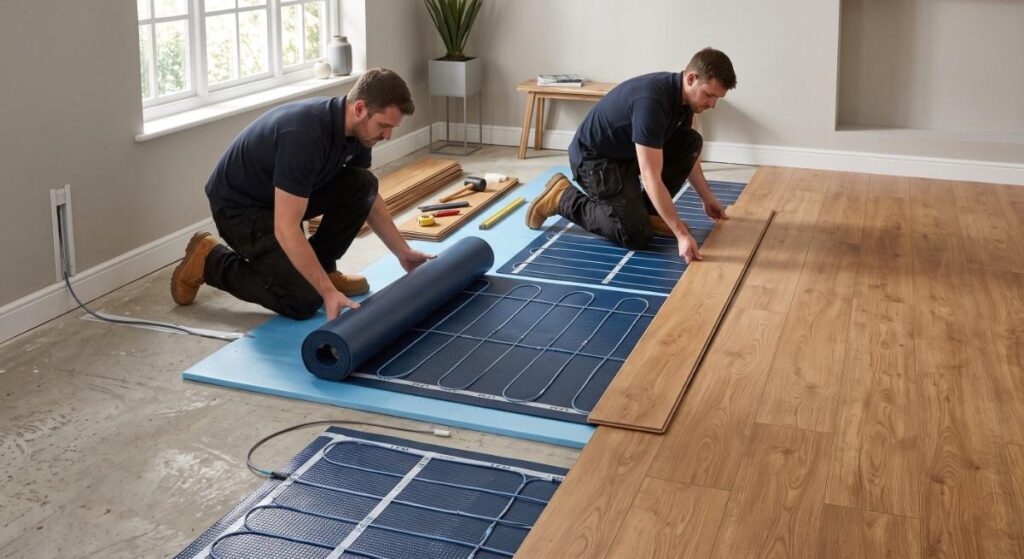
Imagine stepping out of bed on a cold morning and placing your feet on a warm laminate floor instead of a chilly surface. That small change can make an entire room feel more comfortable. Modern electric underfloor heating makes this possible without bulky radiators taking up wall space. For laminate flooring, the heating system must be designed carefully so heat is distributed efficiently while the floor remains safe and stable.
That is where LFM laminated UFH mats become a practical solution. LFM laminated heating mats can provide a low-profile approach for suitable laminate floors. Designed for installation beneath suitable laminate flooring systems, these mats use electrical resistance heating to create gentle, consistent warmth across the floor. This guide explains how the technology works, what makes it suitable for laminate, how installation is approached, and what homeowners and installers should consider before choosing a system from SC Electric.
What Are LFM Laminated UFH Mats?
LFM laminated UFH mats are electric underfloor heating elements designed to work with laminate floor applications. The heating element is integrated into a laminated mat structure, helping provide a stable and organized installation format. When electricity passes through the resistive heating element, electrical energy is converted into heat.
Unlike conventional radiators that warm air mainly from one location, laminated floor heating mats distribute heat across the floor area. The warmed surface then transfers heat upward, creating a more uniform temperature within the room. LFM laminated UFH mats are designed to make this heat distribution practical beneath compatible flooring.
The laminated construction is particularly useful where the floor system needs a slim heating layer and an orderly layout. However, compatibility with the specific laminate product, underlay, subfloor, thermostat, and installation method should always be confirmed before installation.
How Does the Heating Process Work?
The basic operating principle is simple. Electricity travels through the heating conductor inside the mat. Because the conductor has electrical resistance, it generates heat. That heat moves through the layers above the heating system and reaches the laminate surface.
A thermostat controls the system by monitoring floor or room temperature and switching the heating circuit on or off as required. This helps prevent unnecessary heating and allows users to maintain a comfortable temperature.
LFM laminated heating mats are especially useful when the goal is gentle background warmth rather than extremely high floor temperatures. Correct system sizing, temperature control, and installation are important because laminate materials can have manufacturer-specific temperature limitations.
Why Are They Suitable for Laminate Flooring?
Laminate flooring is popular because it combines attractive designs, durability, and relatively simple maintenance. However, not every laminate floor is automatically suitable for electric underfloor heating. The flooring manufacturer should clearly state whether its product can be installed over an electric heating system.
When approved for use, laminated floor heating mats can provide several advantages. Heat is spread over a broad area instead of being concentrated around a radiator. The result can feel comfortable underfoot and can reduce cold spots when the system has been designed and installed correctly.
Another benefit is space efficiency. For renovation projects, LFM laminated UFH mats can help create warmth without adding bulky visible equipment. Because the heating system is beneath the floor, there is no need to reserve wall space for large radiators. This can provide greater flexibility when arranging furniture and designing interiors.
Main Components of an LFM Heating System
A typical system includes the heating element, compatible underlay, thermostat, temperature sensor, electrical protection, suitable laminate, and a prepared subfloor.
LFM heating mats should be selected according to the room area, heating requirement, floor construction, and electrical design. Areas covered by permanent furniture may not require heating, so the heated area should be calculated carefully rather than simply matching the total room size.
Installation: What Should You Consider?
Before installing LFM underfloor heating mats, the subfloor should be clean, dry, level, and structurally suitable. Uneven surfaces can affect the flooring system and may create installation problems.
The installer should first determine the usable heated area. The heating mat is then positioned according to the manufacturer’s layout instructions. Cutting or modifying heating elements incorrectly can damage the system, so only permitted adjustments should be made to the mat structure.
A compatible thermostat and floor sensor are also important. The sensor helps monitor temperature and allows the control system to maintain the selected setting.
After the heating installation is completed and tested, the laminate flooring can be installed according to both the flooring and heating manufacturers’ instructions. Electrical connections and testing should be handled by appropriately qualified professionals.
Benefits of Laminated Floor Heating
One of the strongest advantages of laminated floor heating mats is comfort. Instead of relying entirely on warm air circulating around the room, the floor itself becomes a broad source of radiant warmth.
Other potential benefits include even heat distribution, better underfoot comfort, hidden heating equipment, flexible interior layouts, programmable control, and potential energy savings when correctly operated.
Energy Efficiency and Temperature Control
Efficient heating depends on insulation, floor preparation, correct system sizing, and intelligent controls.
A programmable thermostat can help users schedule heating around daily routines. For example, the system can be set to warm the floor before occupants typically use the room rather than operating continuously at the same temperature.
Because laminate has specific thermal characteristics, the heating system should operate within the temperature range approved by the flooring manufacturer. Excessive temperatures can potentially affect flooring performance, so proper controls are essential.
LFM Underfloor Heating Compared With Traditional Heating
Traditional radiators heat a room primarily by warming surrounding air. Underfloor heating creates a larger heated surface, allowing warmth to be distributed across the room.
LFM heating mats can be considered when these conditions are favorable. The choice depends on floor construction, insulation, electricity availability, usage patterns, and the desired heating strategy.
Where Else Are Heating Mats Used?
Heating mat technology is not limited to indoor laminate floors. Different heating products can be designed for specialized applications. For example, Outdoor Snow Melting Mats can help address snow and ice accumulation on suitable outdoor surfaces when correctly specified for the environment.
For indoor applications, laminate floor heating mats can be considered where the flooring manufacturer permits electric underfloor heating. The important point is to select a product designed for the specific application rather than assuming one heating mat can be used everywhere.
Similarly, Outdoor Snow Melting Mats require application-specific planning because outdoor conditions, surface materials, moisture exposure, electrical protection, and control requirements differ from indoor flooring installations.
Maintenance and Long-Term Performance
One advantage of electric underfloor heating is that the heating elements are installed beneath the finished floor, so there are few visible components requiring routine maintenance. However, long-term performance still depends on correct installation and electrical protection.
Users should avoid making unapproved changes to the floor that could damage the heating system. If flooring needs to be replaced or repaired, the heating layout should be considered before drilling, fastening, or cutting into the floor.
A thermostat can also be checked periodically to ensure it responds correctly to temperature settings. If the floor develops an unusual hot area, fails to warm, or shows control problems, professional inspection is recommended.
Common Mistakes to Avoid
Problems can arise when unsuitable laminate or underlay is used, temperature limits are ignored, sensors are positioned incorrectly, or electrical connections are poorly completed. Careful planning and testing can prevent these issues.
Why Choose SC Electric?
SC Electric focuses on electric heating solutions designed for practical residential and industrial applications. When considering an underfloor heating project, product selection should be based on technical requirements rather than appearance alone.
The team can help customers understand application requirements, product characteristics, installation considerations, and heating-system options. Choosing the correct solution at the planning stage can make installation smoother and help achieve consistent performance.
Final Thoughts
A warm laminate floor can add comfort without changing the visual character of a room. With the right product, compatible flooring, correct temperature control, and professional installation, an electric underfloor heating system can provide discreet and consistent warmth.
The key is to treat the floor, heating system, controls, insulation, and installation method as one complete system. Before purchasing, verify laminate compatibility and technical requirements. With careful planning, LFM laminated UFH mats can be a smart option for comfortable, space-saving electric floor heating. LFM underfloor heating mats can also support discreet heating where compatible flooring and controls are specified.
FAQ
Can LFM laminated UFH mats be used under laminate flooring?
Yes, LFM laminated UFH mats can be suitable beneath compatible laminate flooring. Always confirm the laminate manufacturer’s heating approval, temperature limits, underlay requirements, and installation instructions before proceeding.
How do LFM laminated heating mats generate heat?
LFM laminated heating mats generate warmth when electrical current passes through their resistive heating elements. The electrical energy converts into heat, which moves through the flooring and provides comfortable warmth.
Are laminate floor heating mats energy efficient?
Laminate floor heating mats can operate efficiently when properly sized, installed over suitable insulation, and controlled with an appropriate thermostat. Actual energy consumption depends on room conditions, usage, insulation, and temperature settings.
Do LFM heating mats require regular maintenance?
LFM heating mats generally require minimal routine maintenance because their heating elements remain beneath the finished floor. However, thermostat performance, electrical connections, and unusual temperature changes should be professionally checked when necessary.
Can LFM underfloor heating mats be installed in every laminate floor?
No, not every laminate floor is compatible with electric underfloor heating. Always check the flooring manufacturer’s specifications for approved heating systems, maximum temperatures, underlay requirements, and installation conditions before choosing a product.