
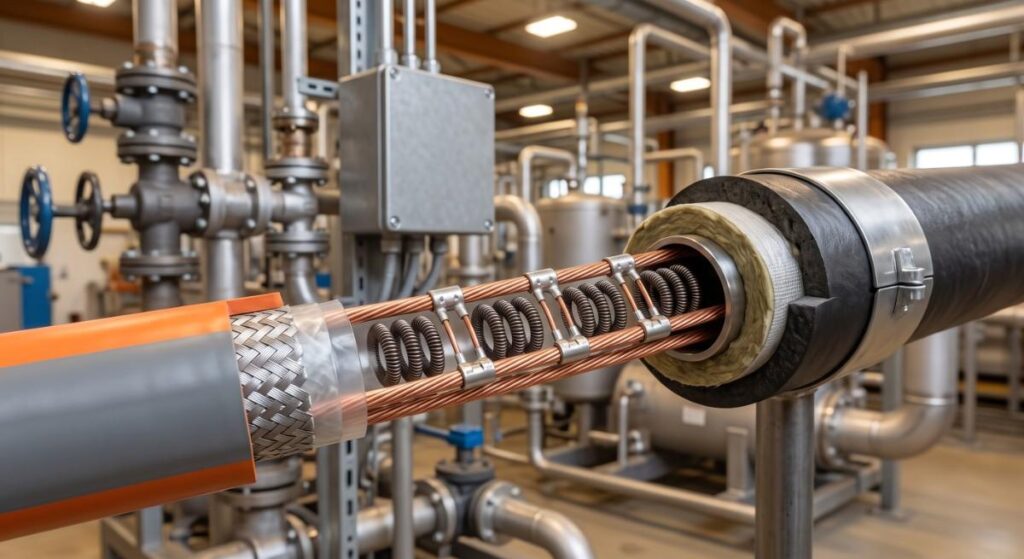
Keeping pipelines, tanks, valves, and process equipment at the right temperature is essential across many industries. Whether it is preventing water pipes from freezing during winter or maintaining the temperature of industrial chemicals, heat tracing technology plays a vital role in ensuring smooth operations.
Understanding how constant wattage heat tracing works helps businesses choose the right heating solution for their applications. Unlike conventional heating methods, constant wattage systems deliver consistent heat output across the entire cable length, making them ideal for applications requiring stable temperatures.
At SC Electric, we provide high-quality heat tracing solutions designed for industrial and commercial environments. Our reliable heating products help improve energy efficiency, protect equipment, and reduce maintenance costs.
In this guide, you’ll learn how constant wattage heat tracing works, its components, advantages, applications, installation process, and how it compares with other heating technologies.
What Is Constant Wattage Heat Tracing?
Constant wattage heat tracing is an electrical heating technology that produces a fixed amount of heat per meter or foot regardless of the cable length. The cable continuously delivers uniform heat whenever power is supplied.
Unlike variable-output systems, a constant wattage heating cable maintains the same heat output throughout its operating length, making it suitable for applications where a consistent temperature is required.
These systems are commonly installed on:
- Water pipelines
- Chemical process lines
- Oil pipelines
- Fuel transfer systems
- Storage tanks
- Valves
- Roof and gutter systems
Because of its dependable performance, this technology is widely used in industrial and commercial facilities.
How Constant Wattage Heat Tracing Works
Understanding how constant wattage heat tracing works begins with knowing its internal construction.
A constant wattage cable contains two insulated bus wires running parallel to each other. At regular intervals, a resistance heating wire is connected between these conductors. When electrical power flows through the circuit, the resistance wire generates heat.
Unlike cables that automatically adjust output, the heating element produces the same wattage continuously across every heating zone.
The process works as follows:
- Electrical Power Supply: The cable is connected to a suitable power source.
- Current Flows Through Bus Wires: Electricity travels through the parallel conductors.
- Resistance Wire Generates Heat: Each heating section converts electrical energy into thermal energy.
- Uniform Heat Distribution: Every section produces equal heat output, ensuring consistent temperature maintenance.
- Heat Transfers to the Pipe: The generated heat passes through insulation directly into the pipeline or equipment.
This simple but effective operating principle explains how constant wattage heat tracing works for maintaining stable process temperatures.
Main Components of a Constant Wattage Heating System
A complete electric heat tracing system consists of several essential components.
- Heating Cable: The constant wattage heat trace cable is the primary heating element responsible for producing consistent heat.
- Power Connection Kit: Provides safe electrical connection to the power source.
- End Seal Kit: Protects cable ends from moisture and environmental damage.
- Temperature Controller: Thermostats regulate cable operation, reducing unnecessary energy consumption.
- Insulation: Thermal insulation minimizes heat loss and improves system efficiency.
- Junction Boxes: Allow secure electrical connections in industrial installations.
Together, these components ensure reliable and efficient operation.
Advantages of Constant Wattage Heat Tracing
Many industries choose constant wattage heat tracing because of its numerous benefits.
- Consistent Heat Output: Every section of the cable delivers uniform heating, making temperature maintenance highly reliable.
- Excellent Temperature Control: Ideal for applications requiring fixed operating temperatures.
- Long Cable Runs: A constant wattage heating cable can support extended pipeline installations without losing heating performance.
- High Durability: Designed to withstand harsh industrial environments including chemicals, moisture, and outdoor exposure.
- Low Maintenance: Minimal moving parts reduce maintenance requirements over the system’s lifespan.
- Reliable Performance: The cable continues providing dependable heating even in demanding industrial conditions.
Applications of Constant Wattage Heat Tracing
Constant wattage systems are used across numerous industries.
- Oil & Gas: Maintains crude oil viscosity and prevents wax buildup.
- Chemical Plants: Protects process lines carrying temperature-sensitive chemicals.
- Food Processing: Maintains product temperatures during manufacturing.
- Pharmaceutical Industry: Supports temperature-controlled production processes.
- Water Supply Systems: Prevents freezing in exposed pipelines.
- Fire Protection Systems: Keeps sprinkler pipes operational during freezing conditions.
- Power Plants: Protects essential piping and equipment from temperature fluctuations.
These industries depend on industrial heat tracing solutions for safe and uninterrupted operations.
Installation Process
- Proper installation ensures maximum efficiency.
- Clean the pipe surface thoroughly.
- Attach the heat tracing cable securely along the pipeline using approved fixing tape.
- Install temperature sensors where required.
- Connect power using certified connection kits.
- Apply thermal insulation over the cable.
- Test insulation resistance before energizing the system.
Professional installation significantly improves performance and system longevity.
Constant Wattage vs Self-Regulating Heat Tracing
Many buyers compare Self-Regulating or Constant Wattage systems before selecting a heating solution.
Feature | Constant Wattage | Self-Regulating |
Heat Output | Fixed | Automatically adjusts |
Temperature Control | Excellent for stable temperatures | Ideal for changing conditions |
Long Pipeline Performance | Very Good | Good |
Initial Cost | Moderate | Higher |
Energy Savings | Thermostat-controlled | Automatic adjustment |
Industrial Use | Extensive | Extensive |
The choice between Self-Regulating or Constant Wattage depends on the operating environment and temperature requirements.
Energy Efficiency Tips
Although constant wattage cables provide continuous heating, energy consumption can be optimized.
- Install high-quality insulation.
- Use programmable thermostats.
- Perform regular inspections.
- Replace damaged insulation immediately.
- Select the correct cable wattage.
- Schedule preventive maintenance.
These practices help maximize efficiency while reducing operating costs.
Common Mistakes to Avoid
Avoid these common installation errors:
- Choosing incorrect cable wattage
- Skipping insulation
- Poor cable routing
- Incorrect electrical connections
- Ignoring temperature controllers
- Overlapping cables unless specifically designed
- Neglecting routine inspections
Professional installation minimizes these risks.
Why Choose SC Electric?
SC Electric delivers reliable and high-performance heat tracing solutions tailored to industrial and commercial applications. Our products are manufactured using premium materials, comply with industry standards, and are engineered for long-term durability. From expert technical guidance to dependable after-sales support, we help customers select the right heating solution for efficient temperature maintenance and equipment protection.
Conclusion
Knowing how constant wattage heat tracing works enables businesses to choose a dependable solution for maintaining process temperatures, preventing freezing, and improving operational reliability. A well-designed electric heat tracing system ensures consistent heat output, long service life, and efficient performance across a wide range of industrial applications.
Whether you operate in oil and gas, chemical processing, food production, or water treatment, investing in a quality constant wattage heat trace cable from SC Electric provides dependable protection for your critical infrastructure while reducing maintenance and downtime.
FAQ
How does constant wattage heat tracing work?
Constant wattage heat tracing works by passing electricity through resistance wires connected between parallel bus wires. The cable delivers consistent heat output across its entire length, making it ideal for maintaining stable temperatures in industrial pipelines and equipment.
Where is constant wattage heat tracing commonly used?
Constant wattage heat tracing is widely used in oil and gas facilities, chemical plants, food processing industries, water pipelines, storage tanks, pharmaceutical manufacturing, fire protection systems, and other industrial applications requiring reliable temperature maintenance.
What is the difference between self-regulating and constant wattage heat tracing?
Self-regulating cables automatically adjust heat output based on surrounding temperatures, while constant wattage cables produce fixed heat continuously. Constant wattage systems are preferred where consistent temperatures are essential over long pipeline installations.
Is a constant wattage heating cable energy efficient?
Yes. When installed with proper insulation and controlled using thermostats, a constant wattage heating cable operates efficiently by maintaining required temperatures while minimizing unnecessary energy consumption and reducing heat loss.
How long does a constant wattage heat tracing system last?
A high-quality constant wattage heat tracing system can last many years with correct installation, routine inspections, proper insulation, and regular maintenance. Following manufacturer recommendations helps maximize performance, safety, and overall service life.