
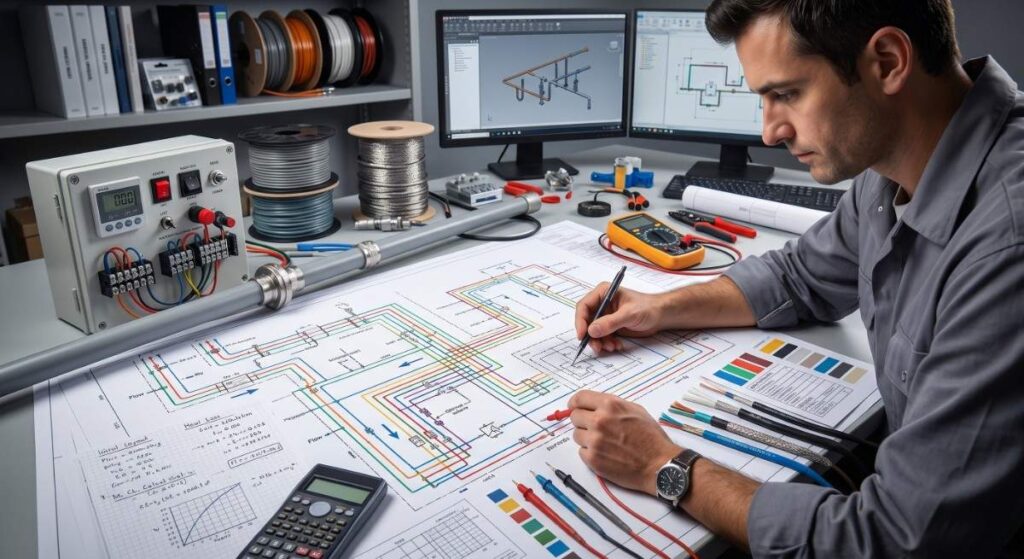
In modern industrial infrastructure, temperature maintenance is not just a requirement—it is a critical safety and efficiency factor. From pipelines carrying viscous fluids to freeze protection in cold environments, heating systems ensure uninterrupted operations. One of the most reliable solutions is the Electric Heat Tracing System Design, which provides controlled thermal management across complex piping networks.
At SC Electric, we specialize in delivering advanced engineering solutions for thermal systems used across industrial and commercial sectors. This guide will help engineers understand how a properly planned system ensures efficiency, safety, and long-term reliability. Whether you are working on chemical plants, oil refineries, or building services, mastering Electric Heat Tracing System Design is essential for modern engineering success.
What is Electric Heat Tracing System Design?
Electric Heat Tracing System Design refers to the engineering process of selecting, sizing, and installing electrical heating cables along pipelines or equipment to maintain required temperatures.
This process ensures that fluids do not freeze, solidify, or lose viscosity during transport. A properly executed Heat tracing system design helps reduce operational downtime and improves energy efficiency.
Engineers at SC Electric often emphasize that a strong foundation in Electric Heat Tracing System Design begins with understanding heat loss calculations and environmental conditions.
Key Components of Heat Tracing Systems
A reliable system includes heating cables, insulation, sensors, and control panels. Selecting the right cable type is essential for performance.
For example, Tc cable domestic indoor is commonly used in indoor temperature maintenance applications where controlled heating is required. In contrast, scna cable outdoor non asphalt application is suitable for harsh outdoor environments where chemical and weather resistance is essential.
Both cable types are critical in modern Electrical Heat Tracing System installations and must be chosen carefully during the Electric Heat Tracing System Design stage.
Additionally, insulation materials play a vital role in minimizing heat loss, while thermostats and monitoring systems ensure safety and energy optimization.
Step-by-Step Electric Heat Tracing System Design Process
Designing a system requires a structured engineering approach. Below is a step-by-step breakdown used in professional projects.
Step 1: Heat Loss Calculation
The first step in Electric Heat Tracing System Design is determining heat loss from pipes or equipment. Factors include ambient temperature, pipe diameter, and insulation thickness. This ensures accurate system sizing.
A proper Heat tracing engineering design starts with detailed thermal analysis to avoid overdesign or underperformance.
Step 2: Selecting Heating Cable Type
Choosing the correct cable is essential. For indoor residential or light commercial applications, tc cable domestic indoor provides efficient heat distribution. For industrial outdoor systems, scna cable outdoor non asphalt application is preferred due to its durability.
This selection process is a key part of any Heat tracing system design strategy.
Step 3: System Zoning and Layout
Divide the pipeline network into heating zones based on heat demand. This ensures uniform heating control and prevents energy waste. Proper zoning is a core principle in Electric Heat Tracing System Design.
Step 4: Power Supply and Control System
Designing electrical load requirements and selecting control panels is critical. A well-designed Electrical Heat Tracing System ensures safe operation and prevents overheating.
Timers, sensors, and thermostats must be integrated for automation and monitoring.
Step 5: Insulation and Protection
Insulation reduces energy loss and improves efficiency. Without proper insulation, even the best system fails. This stage is crucial in Industrial heat tracing systems used in large-scale plants.
Step 6: Testing and Commissioning
Once installed, systems must undergo testing for resistance, continuity, and insulation performance. This ensures the Electric Heat Tracing System Design meets safety standards.
Engineering Considerations for Better Performance
When working on Electric Heat Tracing System Design, engineers must consider environmental conditions, pipe material, and operational temperature range.
The Heat tracing engineering design process also includes safety compliance with international standards and energy optimization techniques.
In large industrial projects, Industrial heat tracing systems require redundancy planning and monitoring systems to prevent failures.
Proper documentation and simulation tools are part of a modern Electric heat tracing design guide, helping engineers avoid design errors.
Applications of Heat Tracing Systems
Electric heat tracing is widely used across industries such as:
- Oil & gas pipelines
- Chemical processing plants
- Water supply systems
- Fire protection pipelines
- Food and beverage industries
Each application requires customized Electric Heat Tracing System Design to match operational needs.
In residential and commercial buildings, simpler systems using tc cable domestic indoor ensure freeze protection and comfort heating.
For outdoor industrial pipelines, systems using scna cable outdoor non asphalt application provide durability and reliability in extreme environments.
Common Mistakes in Heat Tracing Design
Engineers often face challenges due to improper planning. Common mistakes include:
- Incorrect heat loss estimation
- Poor cable selection
- Inadequate insulation
- Lack of system zoning
- Ignoring maintenance requirements
A professional Heat tracing system design must address these issues early to avoid system failure.
Following a structured Electric heat tracing design guide ensures reliability and long-term performance.
Why Choose SC Electric?
At SC Electric, we specialize in delivering advanced thermal solutions tailored to industrial requirements. Our expertise in Electric Heat Tracing System Design ensures energy efficiency, safety, and durability.
We combine engineering precision with modern control technologies to deliver high-performance systems across industries.
Conclusion
A well-planned heating system is essential for modern industrial operations. By following structured engineering principles, selecting the right materials, and applying accurate calculations, engineers can build efficient systems that last.
The importance of Electric Heat Tracing System Design cannot be overstated, especially in industries where temperature control directly impacts safety and productivity. With the right approach and expertise from SC Electric, businesses can achieve reliable and energy-efficient heating solutions for any application.
FAQ
What is Electric Heat Tracing System Design?
It is the engineering process of planning and installing heating cables to maintain pipeline temperatures, prevent freezing, and ensure smooth fluid flow in industrial and commercial systems.
Where is heat tracing commonly used?
It is widely used in oil pipelines, chemical plants, water systems, and buildings to maintain temperature stability and prevent freezing or viscosity loss in materials.
What is the role of insulation in heat tracing systems?
Insulation reduces heat loss, improves energy efficiency, and ensures that the heating system operates effectively under different environmental conditions and temperature variations.
How do engineers select heating cables?
Cable selection depends on environment, temperature needs, and application type, ensuring safe and efficient performance in indoor, outdoor, or industrial conditions.
Why is system design important in heat tracing?
Proper system design ensures safety, energy efficiency, and reliability while preventing overheating, underperformance, and long-term operational failures in heating systems.