
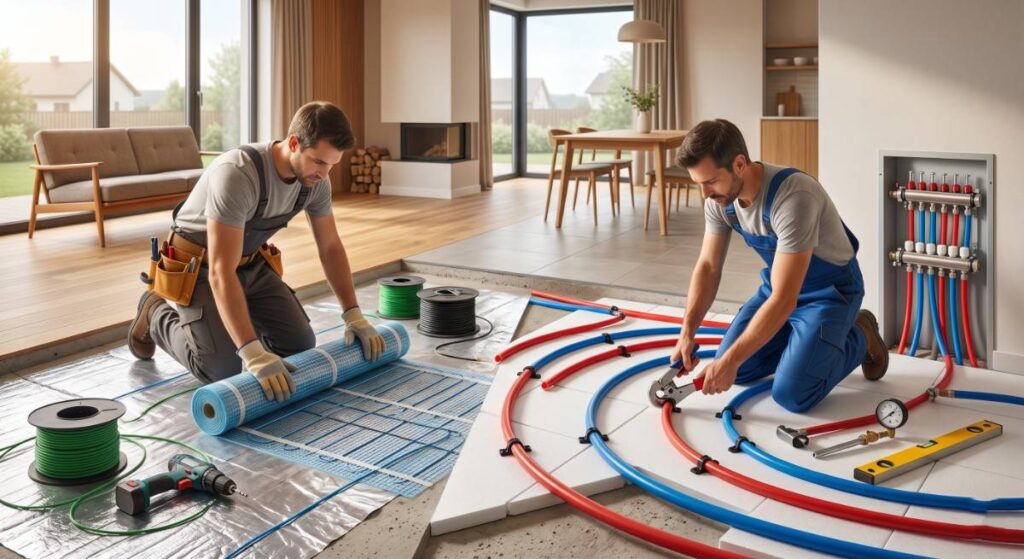
Underfloor heating has become one of the most popular choices for modern homeowners looking for comfort, energy efficiency, and stylish heating solutions. Whether you are renovating an older property or building a new one, choosing between electric and water-based systems can significantly affect your heating costs, installation process, and long-term comfort. In this guide by SC Electric, we will explore Electric vs Hydronic Underfloor Heating to help you decide which option is best suited for your home.
From energy efficiency to installation requirements, both systems have their own advantages. Understanding how they work and where they perform best will help you make a smarter investment for your property.
Understanding Underfloor Heating Systems
Underfloor heating distributes warmth evenly beneath the floor surface, creating consistent temperatures throughout the room. Unlike traditional radiators, these heated flooring systems eliminate cold spots and improve overall comfort.
The two main types are:
- Electric systems
- Hydronic (water-based) systems
When comparing Electric vs Hydronic Underfloor Heating, the biggest differences involve installation cost, energy usage, maintenance, and property size compatibility.
What Is an Electric Underfloor Heating System?
An electric underfloor heating system uses electric cables or heating mats installed beneath the floor. Once connected to the power supply, the cables generate heat that radiates upward through the floor surface.
This system is especially popular for:
- Bathrooms
- Kitchens
- Apartments
- Renovation projects
An electric underfloor heating system is easier and faster to install because it requires less structural work than water-based alternatives. It is commonly paired with tile, laminate, or engineered wood flooring.
Benefits of Electric Underfloor Heating
- Quick Installation: Electric systems are relatively simple to fit, making them ideal for smaller spaces or retrofit projects.
- Lower Initial Costs: Compared to water-based systems, electric heating usually costs less upfront.
- Faster Heating Response: The system warms up quickly, providing heat within a short period.
- Ideal for Small Areas: For bathrooms or single-room installations, electric radiant floor heating can be a cost-effective solution.
Drawbacks of Electric Heating
- Higher operating costs in larger homes
- Depends heavily on electricity prices
- Less suitable for whole-house heating
Despite these limitations, many homeowners still prefer electric radiant floor heating for convenience and easy maintenance.
What Is a Hydronic Underfloor Heating System?
A hydronic underfloor heating system uses warm water flowing through pipes beneath the floor surface. The water is heated using a boiler or heat pump and circulated throughout the property.
This method is highly popular in larger homes and modern developments due to its long-term efficiency.
A hydronic underfloor heating system is often integrated into new-build properties because installation requires more planning and floor depth.
Benefits of Hydronic Heating
- Lower Running Costs: Water-based systems are generally more energy-efficient for larger areas.
- Excellent for Large Homes: Hydronic systems perform exceptionally well in open-plan spaces and multi-room properties.
- Energy Efficiency: These systems work effectively with renewable energy technologies such as heat pumps.
- Better Long-Term Investment: Although installation is expensive initially, lower utility costs can provide long-term savings.
Drawbacks of Hydronic Heating
- Higher installation costs
- Longer installation time
- Requires professional hydronic heating installation
Because of the complexity involved, professional hydronic heating installation is essential to ensure proper performance and efficiency.
When evaluating Electric vs Hydronic Underfloor Heating, several important factors should be considered.
Installation Complexity
Electric systems are simpler to install and ideal for renovations. Water-based systems require pipes, manifolds, and connections to a boiler or heat pump.
If you are upgrading a single room, electric systems may be the better option. For entire homes, hydronic systems often provide better value.
Running Costs
Electric systems usually have lower upfront costs but higher monthly operating expenses. Hydronic systems cost more to install but are cheaper to run over time.
For homeowners seeking efficient domestic heating systems, hydronic heating often delivers greater long-term savings.
Energy Efficiency
Hydronic systems generally outperform electric systems in energy efficiency, particularly in larger spaces.
Many modern domestic heating systems now integrate underfloor heating with renewable energy sources for sustainable living.
Maintenance Requirements
Electric systems require minimal maintenance because there are no moving parts or water pipes.
Hydronic systems may require occasional servicing to maintain pipe pressure and boiler performance.
Heating Performance
Both systems provide consistent warmth, but hydronic systems are often better for continuous heating across larger properties.
Modern heated flooring systems are designed to maximize comfort while reducing energy waste.
Best Applications for Electric Heating
Electric underfloor heating works best in:
- Bathrooms
- Small kitchens
- Loft conversions
- Apartments
- Renovation projects
Because installation is simpler, many homeowners choose electric systems for quick upgrades.
Best Applications for Hydronic Heating
Hydronic systems are ideal for:
- New-build homes
- Large living areas
- Open-plan spaces
- Energy-efficient homes
- Commercial and industrial heating systems
In larger properties and industrial heating systems, water-based heating delivers superior performance and operational efficiency.
Energy Consumption and Power Requirements
Before choosing a system, homeowners should understand electrical requirements.
In larger installations, electrical capacity becomes important. Understanding Single Phase vs Three Phase Power helps determine whether your home can support large-scale electric heating efficiently.
For extensive heating projects or commercial properties, Single Phase vs Three Phase Power considerations may influence installation costs and system performance.
Cost Comparison
Electric Heating Costs
- Installation: Lower upfront installation expenses make electric systems appealing for smaller spaces.
- Running Costs: Electricity prices can make ongoing heating expensive for larger homes.
Hydronic Heating Costs
- Installation: More expensive due to pipework and boiler integration.
- Running Costs: Lower energy consumption often results in cheaper long-term operation.
Which System Is Better for Renovations?
For retrofit projects, electric systems are usually easier because they require minimal floor buildup.
Hydronic systems are better suited for new construction where floor levels and insulation can be planned from the beginning.
Environmental Impact
As homeowners become more eco-conscious, underfloor heating plays an important role in reducing carbon emissions.
Hydronic systems paired with heat pumps can significantly improve energy efficiency.
Electric systems powered by renewable electricity also offer sustainable benefits.
Both options contribute to The Future of Home Heating by supporting energy-efficient living and reducing reliance on traditional radiators.
Innovative smart thermostats and renewable integration continue shaping The Future of Home Heating for modern households.
Choosing the Right Underfloor Heating for Your Home
The decision between Electric vs Hydronic Underfloor Heating depends on several factors:
- Property size
- Budget
- Renovation or new build
- Energy efficiency goals
- Installation timeline
Choose electric heating if:
- You need a simple installation
- You are heating smaller rooms
- You want lower upfront costs
- industrial heating systems
- You need whole-house heating
- You want lower long-term costs
- You are building a new home
Conclusion
Choosing between Electric vs Hydronic Underfloor Heating requires careful consideration of your property type, energy needs, and budget. Electric systems are ideal for smaller spaces and quick renovations, while hydronic systems provide excellent long-term efficiency for larger homes.
Both options offer comfortable, energy-efficient heating and represent modern alternatives to traditional radiators. With expert guidance from SC Electric, you can select the perfect underfloor heating solution for lasting comfort and efficiency.
FAQ
Which is cheaper to run, electric or hydronic underfloor heating?
Hydronic systems are usually cheaper to run because they use heated water efficiently across larger spaces. Electric systems may cost more in homes with high daily heating demands.
Is electric underfloor heating suitable for whole-house heating?
Electric heating can heat an entire house, but operating costs may become expensive. It works best for smaller rooms, apartments, or renovation projects with limited installation space.
How long does hydronic underfloor heating last?
A professionally installed hydronic system can last over 50 years. Proper maintenance and quality materials ensure reliable long-term performance and energy-efficient heating throughout the property.
Can underfloor heating work with renewable energy systems?
Yes, hydronic systems work extremely well with heat pumps and renewable technologies. Electric systems can also become eco-friendly when powered using renewable electricity sources.
Does underfloor heating increase property value?
Modern underfloor heating systems improve comfort, energy efficiency, and home appeal. Many buyers view heated floors as a premium feature that adds long-term property value.