
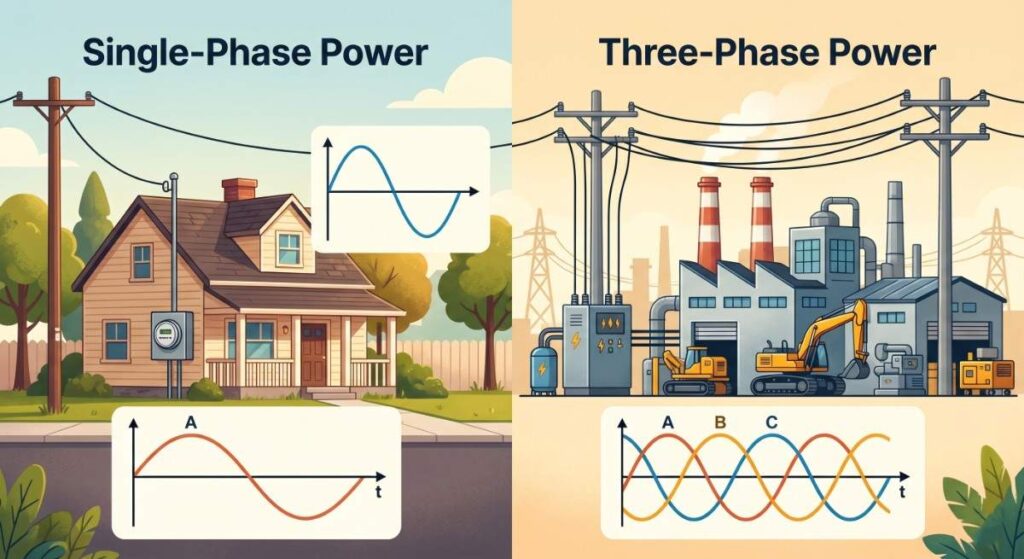
When it comes to electrical systems, understanding the difference between Single Phase vs Three Phase Power is essential—whether you’re a homeowner, business owner, or planning an installation project. Choosing the right type of power supply can impact efficiency, cost, and performance. At SC Electric, we help clients make informed decisions about their electrical needs, ensuring safety and long-term reliability.
In this blog, we’ll break down Single Phase vs Three Phase Power, explain how they work, and help you determine which is best for your application.
What is Single Phase Power?
To understand Single Phase vs Three Phase Power, let’s start with the basics.
What is single phase power? It is the most common type of electricity supply used in residential settings. It consists of one alternating current (AC) waveform, typically delivered through two wires: one live and one neutral.
In a single phase system, the voltage rises and falls in a single cycle, which makes it ideal for powering everyday household appliances like fans, lights, televisions, and small heating systems.
Key Features:
- Simple and cost-effective installation
- Suitable for low power demand
- Common in homes and small offices
- Works well with appliances like electric floor heating mats
What is Three Phase Power?
Now let’s explore what three phase power is.
Three phase power uses three alternating currents, each offset by 120 degrees. This ensures a continuous and balanced power supply, making it much more efficient for high-load applications.
It is widely used in commercial and industrial environments where heavy machinery, large HVAC systems, and motors require consistent and reliable energy.
Key Features:
- Higher efficiency and power output
- Continuous energy flow (no power dips)
- Ideal for industrial and commercial use
- Supports large electrical loads
Single Phase vs Three Phase Power: Core Differences
Understanding Single Phase vs Three Phase Power comes down to how electricity is delivered and used.
1. Power Delivery
- Single phase delivers power through one waveform
- Three phase uses three waveforms for continuous supply
2. Efficiency
- Single phase is less efficient for heavy loads
- Three phase is highly efficient and reduces energy loss
3. Cost
- Single phase systems are cheaper to install
- Three phase systems have higher initial costs but lower operating costs over time
4. Applications
- Single phase: homes and small businesses
- Three phase: factories, large buildings, and commercial setups
5. Reliability
- Single phase may experience power fluctuations
- Three phase offers stable and consistent performance
Single Phase Voltage vs Three Phase Voltage
Another important aspect of Single Phase vs Three Phase Power is voltage.
In a single phase system, the voltage is typically around 230V. In a three phase system, the voltage between phases is higher (around 400V in many regions).
Understanding single phase voltage vs three phase voltage helps determine what equipment can be powered efficiently. Higher voltage in three phase systems allows for better performance of heavy-duty machinery.
Phase Voltage and Line Voltage Difference
When comparing systems, it’s also important to understand the phase voltage and line voltage difference.
- Phase voltage: Voltage measured between a phase and neutral
- Line voltage: Voltage measured between two phases
In three phase systems, line voltage is higher than phase voltage, which contributes to increased power capacity.
Residential vs Commercial Power Supply
The debate of residential vs commercial power supply is closely tied to Single Phase vs Three Phase Power.
Residential (Single Phase)
- Lower energy consumption
- Cost-effective setup
- Ideal for lighting, appliances, and small systems
- Suitable for installations like electric floor heating mats
Commercial (Three Phase)
- High energy demand
- Powers large equipment and systems
- More efficient for continuous operations
- Used in offices, malls, factories, and hospitals
Where Each System is Used
Single Phase Applications:
- Homes
- Small shops
- Lighting systems
- Heating solutions like electric floor heating mats
Three Phase Applications:
- Manufacturing plants
- Data centers
- Elevators and large HVAC systems
- Heavy industrial machinery
Advantages of Single Phase Power
- Easy to install and maintain
- Lower upfront cost
- Perfect for residential needs
- Widely available
Advantages of Three Phase Power
- Higher efficiency
- Supports large loads
- Reduces power losses
- Provides smoother operation for motors
Choosing between Single Phase vs Three Phase Power depends on your specific requirements.
- If you’re running a home or small office, single phase is usually sufficient.
- If you need to operate heavy machinery or large systems, three phase is the better option.
At SC Electric, we recommend evaluating your current and future power needs before making a decision. Upgrading later can be more costly than choosing the right system from the start.
Conclusion
Understanding Single Phase vs Three Phase Power is crucial for making the right electrical decisions. While single phase systems are perfect for residential use, three phase systems provide the power and efficiency required for commercial and industrial environments.
Whether you’re planning a new installation or upgrading your electrical system, SC Electric is here to guide you with expert advice and reliable solutions tailored to your needs.
FAQ
What is the main difference between single phase and three phase power?
Single phase uses one AC waveform, while three phase uses three. Three phase delivers continuous power, making it more efficient for heavy loads and industrial applications.
What is single phase power used for?
Single phase power is mainly used in homes for lighting, fans, appliances, and small systems where power demand is relatively low.
What is three phase power best for?
Three phase power is ideal for commercial and industrial use, supporting heavy machinery, motors, and large electrical systems with higher efficiency and reliability.
Which is more cost-effective: single phase or three phase?
Single phase is cheaper to install, but three phase is more cost-efficient long-term due to better energy efficiency and lower operational losses.
Can a home use three phase power?
Yes, homes with high energy needs or large equipment can use three phase power, but most residential properties typically rely on single phase supply.