
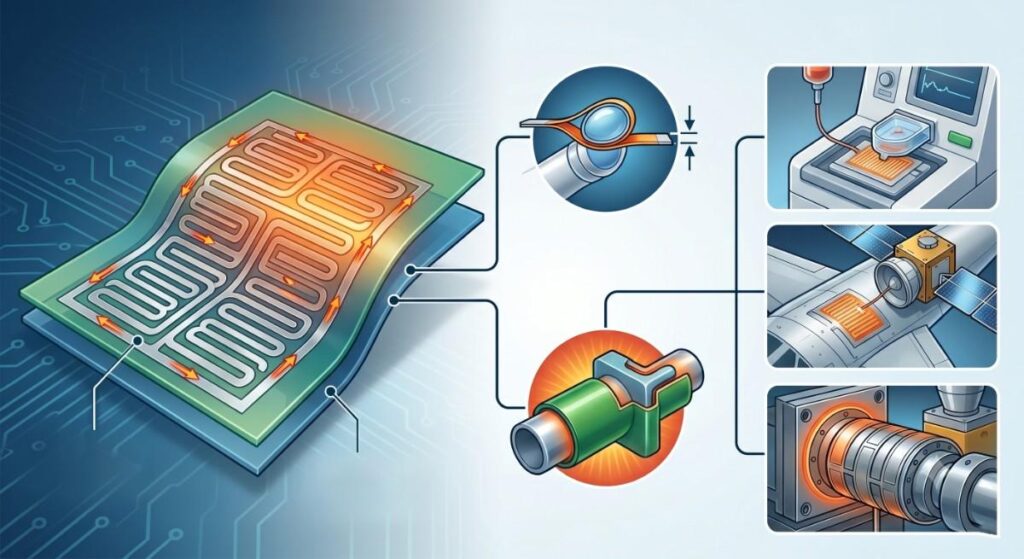
Heating technology has evolved significantly over the years, offering more efficient, reliable, and versatile solutions for residential, commercial, and industrial applications. Among the latest innovations, Foil-Based Heating Elements have gained widespread attention due to their lightweight design, rapid heat transfer, and exceptional energy efficiency.
From modern appliances and medical devices to advanced manufacturing systems, these heating elements provide precise temperature control while maintaining durability and safety. As industries seek cost-effective and sustainable heating solutions, foil heating technology continues to play a vital role in improving operational efficiency.
At SC Electric, we understand the growing demand for advanced heating technologies. This guide explores how Foil-Based Heating Elements work, their major benefits, and the industries that rely on them for dependable performance.
What Are Foil-Based Heating Elements?
Foil-Based Heating Elements are thin heating devices made by etching or laminating conductive metal foil onto an insulated substrate. When electrical current passes through the foil, resistance generates heat, which is then distributed evenly across the surface.
Unlike traditional wire-based heating systems, foil heaters provide uniform heat distribution, reducing hot spots and improving efficiency. They can be designed in various shapes and sizes to fit specific applications, making them highly versatile.
Common materials used include:
- Aluminum foil
- Copper foil
- Nickel-chromium alloys
- Flexible insulation materials
Many modern Aluminium Foil Heaters are engineered for both industrial and consumer applications because of their excellent thermal conductivity and lightweight construction.
How Foil-Based Heating Elements Work
The operating principle behind Foil-Based Heating Elements is straightforward yet highly effective.
- Electrical Resistance Heating: Electric current flows through a conductive foil circuit. The resistance of the foil converts electrical energy into heat.
- Uniform Heat Distribution: The etched foil pattern is designed to spread heat evenly across the entire surface area, preventing localized overheating.
- Heat Transfer: Heat is transferred directly to the target surface through conduction, ensuring fast and efficient warming.
- Temperature Control: Advanced systems incorporate sensors and thermostats to maintain accurate temperatures for sensitive industrial processes.
This efficient design makes Foil-Based Heating Elements ideal for applications requiring precise thermal management and energy conservation.
Key Components of Foil Heating Systems
A typical foil heating assembly includes:
- Conductive Foil Layer: The primary heating component that generates thermal energy.
- Insulation Layer: Protects users and equipment while directing heat toward the desired surface.
- Adhesive Backing: Allows easy installation on equipment, panels, tanks, and machinery.
- Temperature Sensors: Monitor operating temperatures and prevent overheating.
- Control Systems: Provide automated regulation for optimal performance.
Many Aluminium Foil Heaters integrate these components into a compact design, making installation simple and efficient.
Major Benefits of Foil-Based Heating Elements
1. Excellent Heat Uniformity
One of the greatest advantages of Foil-Based Heating Elements is their ability to distribute heat consistently across the entire surface.
Benefits include:
- Reduced hot spots
- Improved product quality
- Better process control
- Enhanced safety
2. Energy Efficiency
Energy efficiency is a top priority in modern heating systems.
Foil heaters:
- Heat up quickly
- Minimize energy waste
- Deliver targeted heating
- Lower operating costs
This efficiency supports both industrial productivity and sustainability goals.
3. Flexible Design Options
Manufacturers can customize foil heaters to fit:
- Curved surfaces
- Small components
- Large industrial panels
- Specialized equipment
This adaptability makes them suitable for numerous industries.
4. Lightweight Construction
Compared to traditional heating technologies, foil heaters are significantly lighter.
Advantages include:
- Easier installation
- Reduced equipment weight
- Improved portability
- Lower transportation costs
5. Fast Response Time
Rapid heating enables equipment to reach operational temperatures quickly.
This improves:
- Productivity
- Process efficiency
- Equipment performance
- Energy savings
6. Long Service Life
With proper installation and maintenance, foil heaters can provide reliable performance for many years.
Durable construction helps resist:
- Moisture
- Corrosion
- Mechanical stress
- Temperature fluctuations
Industrial Applications of Foil-Based Heating Elements
The versatility of Foil-Based Heating Elements allows them to be used across numerous industries.
Manufacturing Industry
Factories use foil heaters for:
- Process heating
- Machine temperature control
- Packaging equipment
- Production line systems
They support efficient manufacturing while maintaining precise temperature requirements.
Medical Equipment
Medical devices require controlled and reliable heating.
Applications include:
- Diagnostic instruments
- Blood analyzers
- Patient warming devices
- Laboratory equipment
The compact design of Aluminium Foil Heaters makes them ideal for sensitive healthcare environments.
Aerospace Sector
Aircraft systems rely on lightweight heating technologies to improve efficiency and safety.
Common uses include:
- Anti-condensation systems
- Instrument heating
- Battery warming
- Environmental controls
Food Processing Industry
Temperature consistency is critical in food production.
Foil heaters help with:
- Packaging equipment
- Food warming systems
- Processing machinery
- Storage temperature management
Automotive Industry
Vehicle manufacturers use foil heating technology in:
- Battery heating systems
- Mirror defrosting
- Seat heating
- Sensor protection
Electronics Industry
Electronic devices often require thermal regulation to ensure reliability.
Applications include:
- Circuit protection
- Semiconductor manufacturing
- Display systems
- Communication equipment
Foil Heating and Industrial Heat Tracing
Modern industrial heat tracing systems frequently incorporate advanced heating technologies to maintain process temperatures and prevent freezing.
Compared to conventional systems, foil heaters provide:
- Faster thermal response
- Improved temperature uniformity
- Lower energy consumption
- Better space utilization
Many facilities combine foil heating solutions with an Industrial Heat Trace Cable network to optimize thermal management throughout pipelines and equipment.
In large-scale operations, industrial heat tracing plays a crucial role in protecting materials, maintaining flow rates, and ensuring production continuity.
Comparing Foil Heaters with Heat Trace Cables
Understanding various Heat Tracing Cable Types helps businesses select the most effective heating solution.
Foil Heating Elements
Best suited for:
- Surface heating
- Equipment warming
- Electronic systems
- Compact applications
Heat Trace Cables
Best suited for:
- Pipe freeze protection
- Tank heating
- Long-distance heating requirements
- Industrial infrastructure
When evaluating the Best Heat Trace Cable, factors such as energy efficiency, maintenance requirements, environmental conditions, and installation complexity should be considered.
Many engineers choose a Self-Regulating Heat Trace Cable because it automatically adjusts heat output based on ambient temperature conditions.
A Self-Regulating Heat Trace Cable can reduce energy consumption while enhancing system safety and reliability.
Different Heat Tracing Cable Types are designed to meet specific operational needs, from residential freeze protection to complex industrial environments.
An Industrial Heat Trace Cable remains an essential component in many industrial heating systems where pipe and vessel temperature maintenance is critical.
The Future of Heating Technology
The growing emphasis on energy efficiency and sustainability is driving innovation across the heating industry.
Experts believe The Future of Home Heating will include:
- Smart temperature controls
- IoT-enabled heating systems
- Advanced foil heating technologies
- Renewable energy integration
As The Future of Home Heating evolves, foil-based systems are expected to become increasingly popular due to their efficiency, flexibility, and environmental benefits.
Additionally, Radiant Heating Cables continue to complement foil heating technologies in residential and commercial applications by delivering comfortable and efficient heat distribution.
Many modern flooring systems utilize Radiant Heating Cables alongside smart controls to maximize comfort and reduce energy consumption.
Why Businesses Choose SC Electric
At SC Electric, we provide innovative heating solutions designed to meet the demanding requirements of modern industries.
Our heating technologies offer:
- High energy efficiency
- Reliable performance
- Precise temperature control
- Custom-engineered solutions
- Long-term durability
Whether you require industrial process heating, equipment temperature management, or advanced thermal control systems, our expertise helps deliver dependable and cost-effective results.
Conclusion
As industries continue to prioritize efficiency, reliability, and sustainability, Foil-Based Heating Elements have emerged as a leading heating solution. Their lightweight construction, uniform heat distribution, rapid response time, and flexible design make them suitable for a wide range of applications.
From manufacturing and medical equipment to aerospace and electronics, foil heating technology offers exceptional performance while reducing energy consumption. Combined with complementary solutions such as heat tracing systems and smart controls, foil heaters represent a significant advancement in modern thermal management.
Partnering with SC Electric ensures access to innovative heating technologies that support productivity, safety, and long-term operational success.
FAQ
What are Foil-Based Heating Elements?
Foil-Based Heating Elements are thin heating devices that use conductive metal foil to generate heat through electrical resistance. They provide uniform heating, fast response times, and energy-efficient performance for industrial, commercial, and residential applications.
Where are Foil-Based Heating Elements commonly used?
They are widely used in manufacturing equipment, medical devices, aerospace systems, food processing machinery, automotive components, and electronic products where precise temperature control and consistent heat distribution are required.
Are Aluminium Foil Heaters energy efficient?
Yes, Aluminium Foil Heaters offer excellent energy efficiency because they heat quickly, distribute heat evenly, and minimize energy loss. Their targeted heating capabilities help reduce operational costs and improve overall system performance.
How do foil heaters differ from heat trace cables?
Foil heaters are designed primarily for surface heating and equipment warming, while heat trace cables are typically used for pipe freeze protection, tank heating, and maintaining temperatures across long industrial systems.
Can Foil-Based Heating Elements be customized?
Yes, they can be manufactured in various shapes, sizes, wattages, and configurations. This flexibility allows them to fit specific equipment, surfaces, and industrial applications while maintaining efficient and reliable heating performance.