
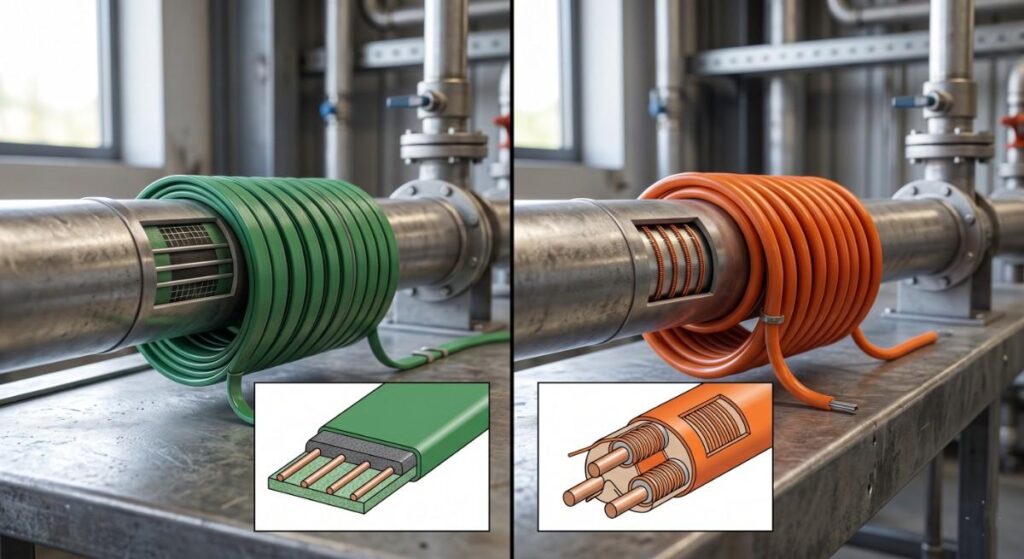
When it comes to protecting pipes, tanks, roofs, and industrial systems from freezing temperatures, choosing the right heat trace cable is essential. Many industries, commercial buildings, and residential facilities rely on advanced heating solutions to maintain optimal temperatures and prevent costly downtime. One of the most common questions businesses ask is: Self-Regulating or Constant Wattage – which option is better?
At SC Electric, we help businesses and property owners choose reliable heating solutions that improve efficiency, reduce maintenance costs, and deliver long-term performance. In this guide, we will compare both technologies, explain how they work, and help you determine the best choice for your application.
Understanding Heat Trace Cable Systems
Heat tracing systems are designed to maintain or raise the temperature of pipes, vessels, and surfaces. These systems use electrically powered heating cables to prevent freezing, maintain process temperatures, or protect equipment from environmental damage.
Modern electric heat tracing systems are widely used in:
- Industrial manufacturing plants
- Oil and gas facilities
- Food processing units
- Commercial buildings
- Residential applications
- Warehouses and storage tanks
The two most common technologies are:
- Self-regulating heat trace cables
- Constant wattage heat trace cables
Understanding the differences between these systems is the first step toward selecting the right solution.
What Is a Self-Regulating Heat Trace Cable?
A self-regulating heat trace cable automatically adjusts its heat output based on surrounding temperatures. As temperatures decrease, the cable produces more heat. When temperatures rise, the cable reduces heat output automatically.
This intelligent design improves energy efficiency and minimizes overheating risks.
How It Works
A self-regulating cable contains a conductive polymer core placed between two bus wires. The polymer reacts to temperature changes by altering electrical resistance.
- Cold environment = lower resistance = more heat
- Warm environment = higher resistance = less heat
Because of this feature, the cable continuously adapts to the environment without requiring manual adjustments.
Advantages of Self-Regulating Cables
- Energy Efficiency: Self-regulating systems consume only the energy needed, making them highly cost-effective over time.
- Improved Safety: These cables reduce the risk of overheating, even when overlapping occurs.
- Easy Installation: Flexible installation makes them suitable for complex pipe layouts.
- Longer Lifespan: Automatic temperature control reduces wear and extends service life.
- Low Maintenance: Minimal monitoring is required because the cable self-adjusts.
Common Applications
- Freeze protection
- Roof and gutter de-icing
- Water pipelines
- Chemical processing systems
- Commercial plumbing systems
Many industries prefer a Self-Regulating Heat Tracing Cable because of its reliability and energy-saving capabilities.
What Is a Constant Wattage Heat Trace Cable?
A constant wattage heat trace cable delivers the same amount of heat output across its entire length, regardless of surrounding temperature conditions.
Unlike self-regulating cables, these systems do not automatically adjust their heating levels.
The cable contains a heating element wrapped around insulated conductors. Electricity flows continuously through the heating wire, producing a fixed wattage output.
The heat output remains constant whether the environment is hot or cold.
Advantages of Constant Wattage Systems
- Stable Heat Output: Perfect for applications requiring consistent temperatures.
- Excellent for Long Pipelines: Suitable for large industrial installations.
- Higher Temperature Capability: Can maintain higher process temperatures compared to some self-regulating systems.
- Lower Initial Cost: In certain projects, installation costs may be lower.
Common Applications
- Industrial processing plants
- Asphalt heating
- Fuel lines
- Steam replacement systems
- Long-distance pipeline heating
Many industrial facilities rely on industrial heat trace cable systems with constant wattage technology for stable thermal performance.
Self-Regulating or Constant Wattage: Key Differences
Choosing between Self-Regulating or Constant Wattage depends on your specific heating requirements. Here are the major differences.
When Should You Choose Self-Regulating Cables?
A self-regulating heat trace cable is ideal when:
- Energy savings are important
- Temperature conditions frequently change
- Safety is a top priority
- Maintenance access is limited
- Complex piping systems exist
Commercial facilities often use these systems because they provide efficient heating while minimizing operational costs.
Many modern electric heat tracing systems now incorporate self-regulating technology due to rising energy efficiency standards.
When Should You Choose Constant Wattage Cables?
A constant wattage heat trace cable is best when:
- Stable heat output is essential
- High process temperatures are required
- Long industrial pipelines need heating
- Environmental temperatures remain predictable
Industries handling chemicals, petroleum products, and manufacturing processes commonly choose constant wattage systems.
Commercial and Residential Heating Applications
Heat tracing technology is no longer limited to industrial facilities. Modern building infrastructure increasingly uses specialized heating cables for comfort and efficiency.
TC Domestic Indoor Heating Cables
TC domestic indoor heating cables are designed for residential floor heating applications. These systems provide consistent warmth, improved comfort, and better energy management inside homes and apartments.
Benefits include:
- Comfortable indoor temperatures
- Reduced cold spots
- Energy-efficient floor heating
- Simple installation
FC Commercial Indoor Heating Cables
Large commercial buildings frequently use FC commercial indoor heating cables for floor warming and indoor climate control.
Applications include:
- Shopping malls
- Office buildings
- Hotels
- Hospitals
- Educational institutions
These systems help maintain comfortable indoor environments while reducing traditional heating costs.
Maintenance and Longevity Comparison
- Self-Regulating Systems: Because they automatically adapt to temperature changes, self-regulating cables typically require less maintenance. They also experience reduced stress on components, extending lifespan.
- Constant Wattage Systems: Constant wattage cables may require additional monitoring and thermostat calibration to ensure consistent performance and prevent overheating.
For industrial environments with harsh operating conditions, selecting a high-quality industrial heat trace cable is critical for long-term reliability.
Environmental Impact
Energy efficiency has become a major factor in selecting heating systems.
Self-regulating systems are considered more environmentally friendly because they reduce unnecessary energy consumption.
As industries move toward sustainable infrastructure, many businesses now prefer Self-Regulating or Constant Wattage systems that optimize power usage while maintaining operational efficiency.
Final Verdict: Which Is Better?
There is no universal answer because the right choice depends on your project requirements.
Choose a Self-Regulating Heat Tracing Cable if you need:
- Energy savings
- Flexible installation
- Safer operation
- Lower maintenance
Choose a constant wattage heat trace cable if you need:
- Continuous heat output
- High-temperature maintenance
- Industrial-grade thermal consistency
At SC Electric, we recommend evaluating factors such as environmental conditions, installation complexity, operating costs, and safety requirements before making a final decision.
Whether you choose Self-Regulating or Constant Wattage, investing in a high-quality heat tracing solution ensures better performance, reduced downtime, and long-term protection for your systems.
FAQ
What is the main difference between self-regulating and constant wattage cables?
Self-regulating cables automatically adjust heat output based on temperature changes, while constant wattage cables deliver fixed heat continuously regardless of environmental conditions.
Which heat trace cable is more energy efficient?
Self-regulating cables are generally more energy efficient because they reduce power consumption when less heat is required during warmer conditions.
Are self-regulating heat trace cables safer?
Yes, self-regulating systems reduce overheating risks and are considered safer for many industrial, commercial, and residential applications.
Where are constant wattage heat trace cables commonly used?
Constant wattage cables are widely used in industrial pipelines, chemical plants, fuel systems, and applications requiring consistent high-temperature maintenance.
Can heat trace cables be used indoors?
Yes, systems such as TC domestic indoor heating cables and FC commercial indoor heating cables are specifically designed for indoor floor heating applications.